
School Is Dead. Long Live Learning.
What happens when classrooms dissolve and children tune into the cosmos?

I went for a run after editing one of Global Witness' promo shorts for Spaceborn. The video captures children's reactions to the first human child being born in outer space. Considering astrology and current technological trends, I estimated that this event would take place in 2043, which is also when the film Spaceborn is set.
The Global Witness series explores how different people witness the birth and their reactions to the unfolding event. I wanted to create a short focused on school-age children. Unfortunately, I was in school watching live when the Challenger disaster occurred, and the TV was quickly turned off and wheeled out of the room. I was also in school when 9/11 happened, witnessing it unfold live on television. Because of these experiences, I would love to see kids react with wonder and excitement to a baby being born in outer space—like witnessing the birth of a little sister.
I began crafting prompts and a script based on a Central American schoolhouse, similar to many I have seen in my travels. Traditional elements like playgrounds, blackboards, books, and wooden desks were part of my vision. I was working on dubbing the Spanish lip sync for the dialogue but needed to take a break.
During my run, I realized that by 2043, schools might look entirely different. After COVID, our workspaces became home-based, and shopping habits evolved dramatically. If all knowledge is instantly accessible at our fingertips, and learning no longer relies solely on memorization from a teacher, what does a school even look like?
I started visualizing AR screens viewed through goggles or smart glasses replacing traditional laptops and projectors. Perhaps schools in 2043 will be vast playgrounds, with individual studies conducted at home, creating a balanced school-home dynamic. Maybe children will tune into teachers from around the world based on time zones and personal interests. Would education focus more on problem-solving, emotional intelligence, and empathy? Could there be unique, individualized learning styles tailored to each child?
The film Spaceborn also depicts massive natural disasters that reshape Earth's landscape. These events could limit access to technology if underwater wireless networks fail or satellites are disrupted by solar flares. While such challenges might slow technological progress, humanity has already crossed a threshold—education will have evolved significantly over the next 20 years. Perhaps the new generation of children is also more psychically attuned, possessing abilities like telepathy and clairvoyance, further transforming how they learn and interact. (And yes, I’ve been listening to the Telepathy Tapes.)
For most of the last century, schools were designed like factories—focused on test scores, age-based groupings, and one-size-fits-all instruction. But every Renaissance is preceded by collapse, and from that collapse emerges new systems. The collapse of our outdated education model has already begun. The Renaissance Now invites us to imagine not just a reformed school—but an entirely new paradigm.
Imagine a new kind of education. One where learning is not memorization, but activation. Where classrooms are not confined spaces, but expansive playgrounds of the body, mind, and soul. Children tune into global teachers by interest, not geography. They learn to solve problems together and navigate inner worlds just as much as outer ones. Emotional intelligence is taught alongside physics. And wisdom is valued as much as knowledge.
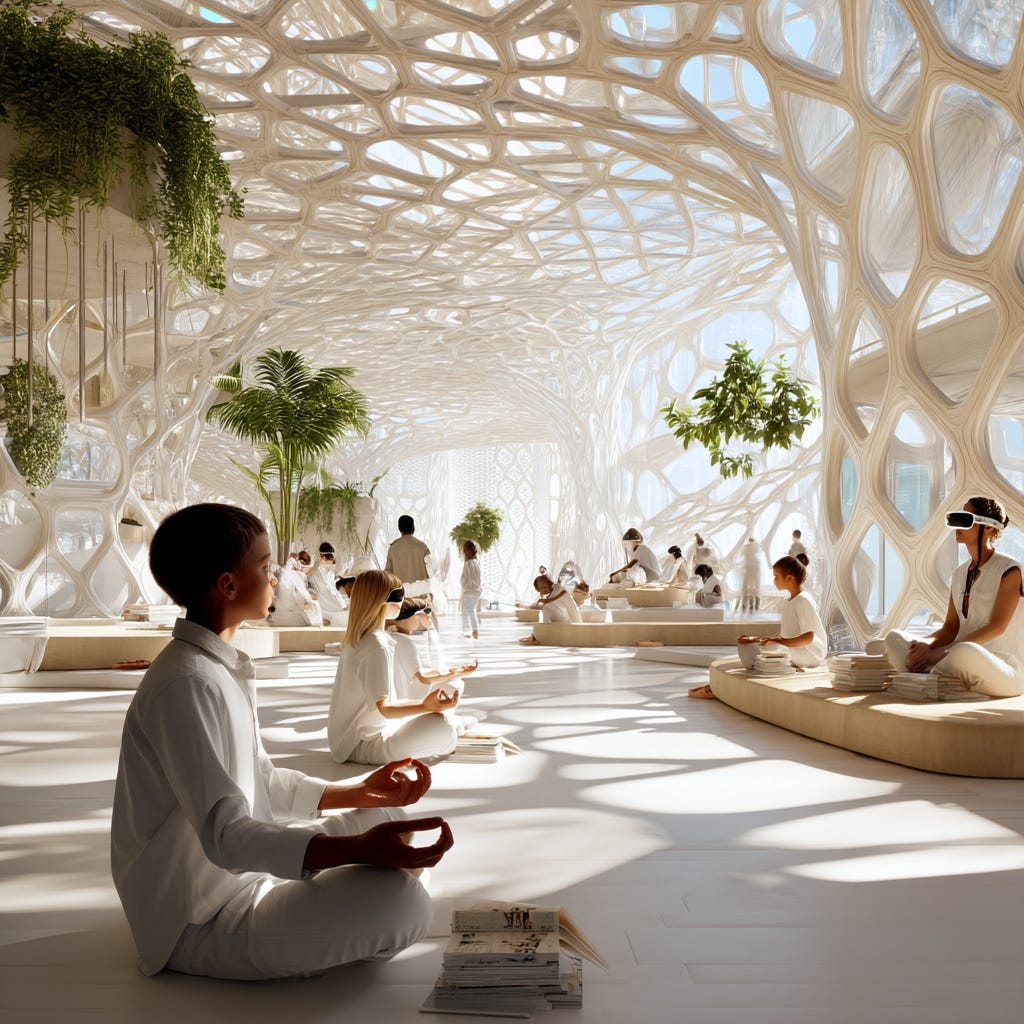
In this vision, some children may develop skills we once called mystical—telepathy, clairvoyance, deep empathy. Perhaps the limitation of traditional tech due to Earth’s changes will push us to discover inner technologies we’ve long forgotten. The human brain and heart, connected and coherent, might be the most advanced tools we’ve ever had.
And from within these new schools will rise the Michelangelos and da Vincis of this era—not bound to paintbrushes and marble, but deep in meditation, recovering ancient wisdom, channeling the blueprints for space travel, sustainable systems, and quantum realities.
As Michelangelo once said, "I saw the angel in the marble and carved until I set him free."
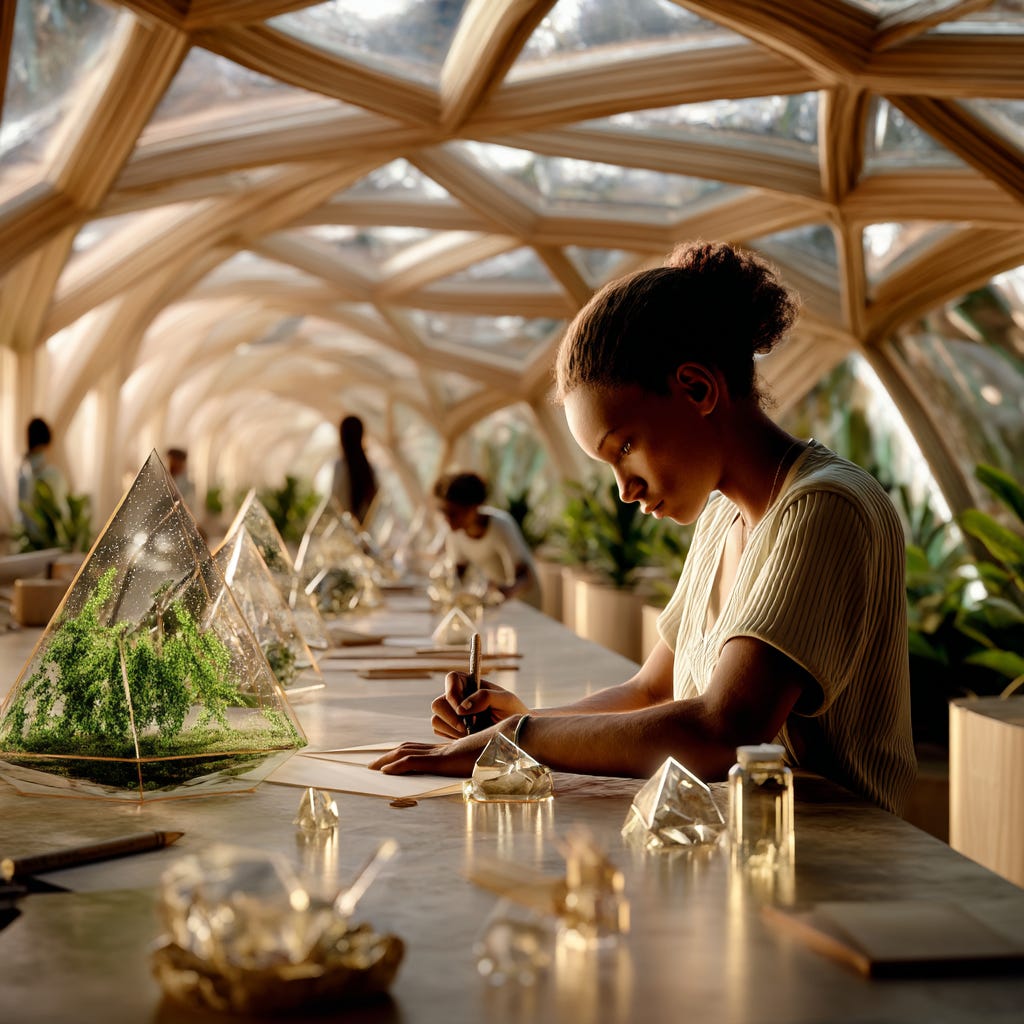
That’s what education becomes in the Renaissance Now: a sacred process of revealing what is already within. The school becomes a sacred studio of human potential.—not bound to paintbrushes and marble, but deep in meditation, recovering ancient wisdom, channeling the blueprints for space travel, sustainable systems, and quantum realities. The school becomes a sacred studio of human potential.
This is the school of the Renaissance Now. And it begins by asking: What if the classroom isn’t a room at all, but a gateway to remembering who we really are?